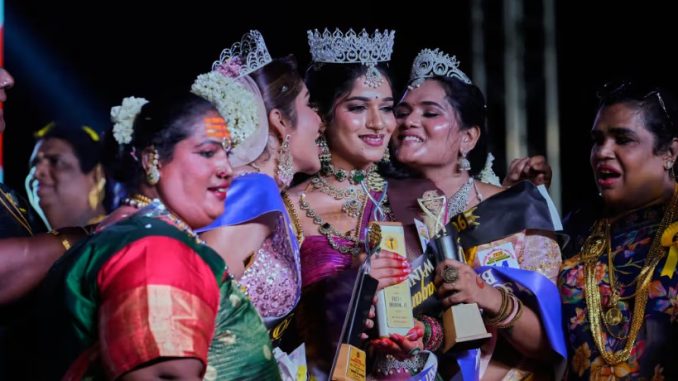
At Koovagam festival in a small village in southern India, hundreds of transgender women gather every year. They wear sarees, decorate their hair with flowers, and take part in beauty contests while crowds cheer for them.
The festival mixes religion and celebration. It is linked to a story from the Hindu epic Mahabharata. In the story, a warrior named Aravan sacrifices his life in war but wants to be married first. The god Krishna transforms into a woman and marries him.
For many transgender women, this story is meaningful because it reflects gender fluidity. During the festival, participants symbolically “marry” Aravan as part of a religious ritual.
But life outside the festival is often difficult. Many transgender people in India face discrimination, violence, and rejection from their families. Right now, there is also growing anxiety over a new national bill. Activists worry the law could hurt transgender rights by requiring people to get approval from a medical board just to change their legal gender.
Despite these challenges, Koovagam is also a place of joy and healing. People share stories, support each other, and take part in a beauty pageant at night.
This year, 24-year-old Surya Kutty won the “Miss Koovagam” title. She said the experience gave her confidence and hope for future competitions.
For many, the festival is more than an event. It is a rare space where they feel accepted, supported, and free to be themselves.

Be the first to comment