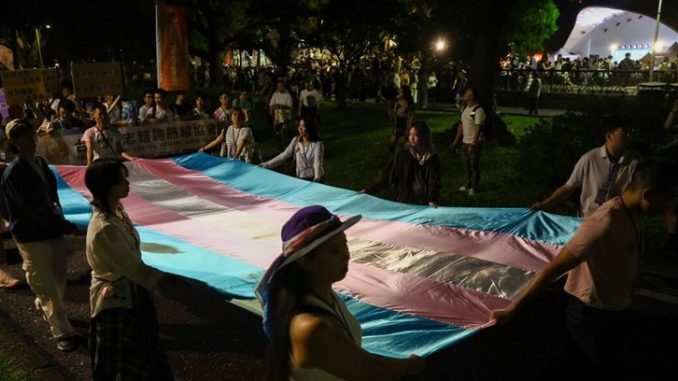
Around 3,800 people took to the streets of Taipei, Taiwan, on October 30 to show their support for the transgender community. The eighth annual Taiwan Trans March called for greater acceptance, equal rights, and an end to discrimination against transgender people.
Organized by the Taiwan Tongzhi (LGBTQ+) Hotline Association, the march carried the theme “Crossing Boundaries, Standing Together.” Participants gathered at 228 Peace Park, then marched through part of the Ximending shopping district before returning to the park.
Marchers carried transgender and rainbow flags. They also held signs with messages such as “Trans Rights Are Human Rights” and “The Patriarchy Is The Enemy, Not Trans Women.” The slogans called for greater understanding and challenged prejudice against transgender people.
One of the main issues raised during the march was the requirement for transgender people to undergo surgery to change the gender markers on their identification documents. Organizers called on the Taiwanese government to remove this requirement.
The event also highlighted the challenges transgender people face in schools and workplaces. Participants stressed the importance of creating a society where people can live openly and safely, regardless of their gender identity.
The march brought together local LGBTQ+ groups and international advocates. More than 61 gender and human rights organizations from Taiwan and other countries took part, according to the organizers. Advocates from Japan, South Korea, Thailand, Hong Kong, Malaysia, and the Philippines also joined the event.
Now in its eighth year, the Taiwan Trans March is one of the few major marches in Asia dedicated specifically to transgender rights. Its growing turnout reflects the importance of creating spaces where transgender people can feel seen, supported, and accepted.
The march took place ahead of Taiwan’s annual LGBTQ+ Pride parade on October 31. Together, the events brought renewed attention to the ongoing fight for equality and the need to protect the rights of transgender people.




Be the first to comment